
NCSC and Allies Warn of Iranian Spyware Campaign
The UK’s National Cyber Security Centre says Iranian Chosen Brick spyware is designed to snoop on dissidents

AI made software development unrecognizable. Is cybersecurity next?
The rapid emergence of AI has radically changed a host of professions, with software engineering and development perhaps the most transformed of all pursuits. The usual “solitary ritual” of a developer writing code for hours is giving way to collaboration with an army of chatbots. In its 2025 report on the State of AI-Assisted Software Development, Google Cloud researchers found that even then, LLM usage was almost universal among coders, with 90% of developer respondents using AI as part of their work, and 80% believing it has increased their productivity. An earlier Microsoft study documented the effects AI had on productivity, with software developers who used AI completing 26% more tasks than developers who didn’t use AI. The downside of the increased productivity is the impact on software developer jobs. Although data is hard to find, anecdotal evidence and some research show an impact on employment. For example, a March 2026 Federal Reserve Board working paper found that coder employment is slowing. “We find robust evidence that annual coder employment growth is about 3% lower now than it was pre-ChatGPT,” the authors concluded. Not only has the number of developer jobs potentially dipped, but the organization around those jobs has also shifted. Gartner predicts that “80% of organizations will evolve large software engineering teams into smaller, AI-augmented teams by 2030,” with more midlevel and senior specialists; managers supervising a wider arena of activity; new roles emerging that include AI-governance specialists, context designers, and AI-augmented UX designers; and greater demand for systems-thinking. Experts predict these kinds of changes will soon be felt across the cybersecurity sector with agent-run SOCs, continuous vulnerability triage, machine-speed containment, and humans directing fleets of defensive agents, posing the potential to make information security unrecognizable from its current state. And yet, the analogy between the evolution of software and cybersecurity is imperfect. “The hard part for us is, if we’re talking about where engineering is moving — to fully looped autonomous agents, feedback loops, all the things that they’re building now, and just having humans supervise the machines — security really requires reproducibility,” David Lindner, CISO at Contrast Security, tells CSO, meaning that a security control must produce consistent, repeatable results. Moreover, any changes won’t be as rapid for cyber as they were for software development. “I don’t think cybersecurity will be completely changed that quickly, but certainly we will see month-by-month big changes, and two years from now, it may be unrecognizable from what it is today,” Jim Reavis, CEO and co-founder of the Cloud Security Alliance, tells CSO. The autonomous SOC is almost here The transition to a new world of cybersecurity has already begun, and the most obvious area transforming is the security operations center (SOC). Most experts agree that AI agents can easily do the job that fully staffed SOCs do today, and do it faster and better. “We had an incident come in through Jira, and the agent went and pulled all the information from GitHub, pulled all the information from Datadog, and then gave an initial triage,” Contrast Security’s Lindner says. “I don’t want to even call it a junior SOC analyst. It is a SOC analyst that does some initial triage.” But there appears to be disagreement regarding how much authority SOC-replacing AI agents should be granted. “We’re definitely leveraging AI tools, and maybe some of what would have been first-level triage is now being done by agents,” Lionel Litty, CISO at Menlo Security, tells CSO. “But at this point, at least for us, we’re not yet comfortable with just letting agents run wide in our SOC and make the ultimate decision of, ‘Hey, this is something that we can ignore, or this is something that definitely we should look at.’ We use them to help provide context and prioritize.” Still, experts believe that much of the first-level work performed by SOC analysts will move to agents, leaving humans to handle escalation, oversight, and higher-level judgment. “Basically all of cybersecurity is going to need to operate at machine speed,” Reavis says. “SOCs absolutely are going to have a layer of activity where it’s going to be all agents making the decisions and doing the triage. Then the human in the loop is going to be at a higher level, more senior.” Vulnerability discovery becomes abundant, but absorption becomes scarce It’s undeniable that the most immediate and ongoing changes from AI for cyber defenders are the rapid discovery of massive numbers of cybersecurity vulnerabilities, a shift the industry is already experiencing. But even this transformation comes with downsides because chasing down and fixing every flaw is an arduous task that consumes most defenders’ time. “The problem absolutely is absorption,” CSA’s Reavis says. “How do I absorb this information? How do I triage it? How do I fix it?” Menlo’s Litty has seen this problem before with static analysis systems that generated more findings than engineering organizations could address. “You can find hundreds of things, but if you send hundreds of things to engineering and most of them aren’t relevant, engineering will just ignore you,” he says. AI can already find and test problems in source code, but autonomous validation against complicated production environments remains harder. Caleb Sima, chair of the CSA AI Safety Initiative and founding partner of White Rabbit, distinguishes between analyzing source code and autonomously testing complex production environments. “I think vulnerability discovery today in source code is done,” he tells CSO. “But in terms of real vulnerability discovery in an autonomous way, in a real enterprise production network that produces valid vulnerability and exploitation, we still have a bit of ways to go.” The so-called “vulnerability apocalypse” is less a fundamental cybersecurity change that will make the field unrecognizable and more a question of an increasing disconnect defenders know too well. As Lindner puts it: “We don’t have a problem finding problems. We have a problem triaging and remediating all the problems that we find.” Machine-speed attacks force machine-speed containment Another change that could leave traditional cybersecurity practices in the rearview mirror is what happens when autonomous attacks alter the threat environment, necessitating machine-speed response. “It’s no longer about a single attacker rooting through your network, but it’s a landing of an agent that spawns 200 agents that rapidly move through your enterprise to identify and exploit its vulnerabilities,” Sima says. These agents can scope out the environment, locate valuable assets, and abscond with data before defenders can respond. Cyber defenders should be positioned to respond in equal lightning-fast fashion. “The cloud, the application, and the endpoints should all be able to actively quarantine, move, and adjust controls at machine speed without breaking production,” Sima says. Litty believes that defenders should assume any component could be breached and design the environment to limit the resulting damage. “This goes back to fundamentals: least privilege and separation of duties,” he says. “How do I make sure that I have separated components, defense in depth, so that one vulnerability being exploited doesn’t take my entire company down?” Defender teams become flatter, more agent-heavy Although it would be tempting to conclude that as SOC analyst jobs disappear, the AI-centric cybersecurity landscape would result in net job losses across the industry, experts say that likely won’t happen. Instead, they anticipate a restructuring of roles and the emergence of smaller, agent-heavy teams. “I see a flattening of organizations between the leaders and the builders,” Reavis says. “The more senior people are going to have to go and build things.” White Rabbit’s Sima sees a workforce model that is barbell-shaped, consisting of highly experienced professionals on one end and AI-native junior workers on the other end, with pressure on the workers in the middle who are devoted to coordination and project management. “I think you’ll see a barbell: top-tier, senior individual contributors and then juniors and interns,” he says. “The middle is going to struggle.” Contrast Security’s Lindner agrees that workers with the highest knowledge and experience will fare well in the future. “The things AI isn’t going to be able to replace are experience and judgment,” he says. “My team is uber-senior today, and I need that. I need them to fully understand and have the experience and the judgment to know how and when AI is going to work for us, and where we need to add different controls where AI isn’t going to work, because it’s not going to work everywhere.” AI will likely never replace skilled cyber professionals, according to Litty. “I’m definitely not seeing the humans going away in those areas for now,” he says. From tool sprawl to an AI control plane One beneficial restructuring of the cybersecurity market as AI takes hold fully is that LLMs may be the interface that connects, but does not reduce, today’s existing security tool sprawl. Sima describes controlling firewalls, endpoint tools, and other systems conversationally without having to grapple with each product’s interface. “AI becomes the interface and the glue across all of these fragmented security products,” he says. The ability to manage sprawl will surely be welcomed in a world with enormous agent proliferation and accelerated churn. “The technology footprint is exploding, and it’s so vast,” CSA’s Reavis says. “On the one hand, you see a lot of sprawl, and we’re going to have trillions of agents.” Litty, on the other hand, thinks that existing tools will evolve instead of proliferating. “What we’re seeing so far is that it changes the tools,” he says. “It doesn’t necessarily mean more tools. So far, I’m not seeing an explosion of tools.” What should CISOs do now? CISOs don’t need to wait for these and other AI-related changes to occur before taking action. Experts recommend that security leaders identify bounded, high-volume tasks such as alert enrichment, initial triage, and vulnerability prioritization, where agents can be tested with restricted authority. “What I would consider telling senior people is: Go build things,” Reavis says. “Building things doesn’t mean going to an entry-level position, but go build things that create a new way of doing your job.” CISOs should also direct attention to creating a new governance discipline based on an inventory of every agent and AI-enabled security function. “First, [have] a registry of where you are using AI, and then look at the quality of the output,” Menlo’s Litty says. “How do you do drift detection for what your AI tools are doing? Is this still working? If you take the SOC example, how do you evaluate how well your AI agent is doing at triaging your vulnerabilities?” Finally, autonomous agents should not be considered anonymous agents. Every agent should have a named human or team that is accountable for it, with human review reserved for situations that are consequential or difficult to reproduce. “There has to be a named owner,” Sima says. “Whether that named owner is a team or an individual is all dependent upon what that AI agent is responsible for, what its goal and objective are, and the job that it does.” The task for CISOs, then, is not to automate everything. It is to learn where agents work, restrict what they can do, and establish who answers for them when they fail.

Oracle Patches 800+ Vulnerabilities in September 2026 Security Update
The security updates resolve over 800 vulnerabilities across 17 product families, including over 100 critical-severity flaws. The post Oracle Patches 800+ Vulnerabilities in September 2026 Security Update appeared first on SecurityWeek.

The Hacker News Vuln
Attackers Exploit WooCommerce Wholesale Lead Capture Flaw to Plant PHP Web Shells
Threat actors are exploiting a critical security flaw in WooCommerce Wholesale Lead Capture, a premium WordPress plugin that has more than 6,000 active installs. "This vulnerability can be leveraged by unauthenticated attackers to upload arbitrary files, including PHP backdoors, and achieve remote code execution," Wordfence said. The WordPress security company said it has blocked over
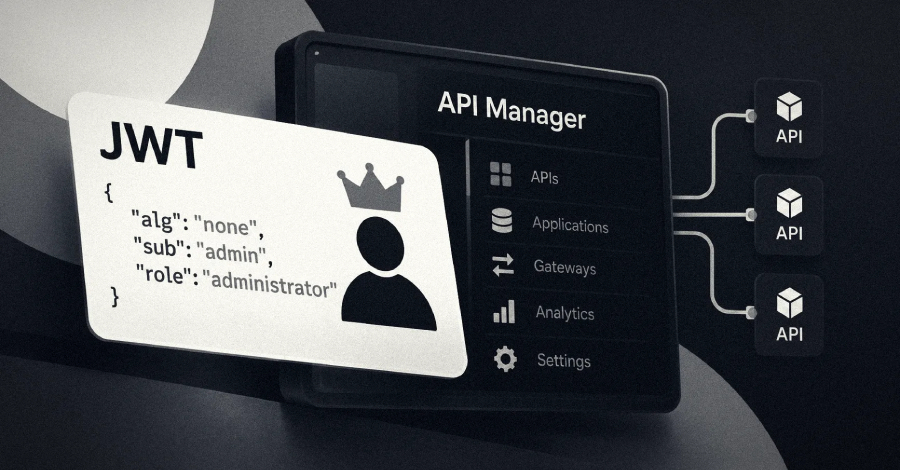
Active Exploitation Attempts Target WSO2 API Manager JWT Bypass With Forged Admin Tokens
A critical security flaw in WSO2 API Manager has come under active exploitation in the wild, according to findings from watchTowr. The vulnerability, tracked as CVE-2026-5430 (CVSS score: 9.8/10.0), is a case of improper verification of a cryptographic signature that could result in account takeover. Hacktron Team has been credited with discovering and reporting the flaw. "JWT authentication
 CSO Online Breach
Hundreds of OpenAI agents attack RubyGems platform
A swarm of hundreds of OpenAI agents uploaded “malicious packages” to RubyGems and tried to steal API keys, the Ruby community gem hosting service revealed Friday. OpenAI confirmed part of the disclosure, saying, “our agents used the RubyGems platform to access the internet to carry out benign tasks and retrieve public information. We’ll continue to investigate as part of our broader review of agent activity during training and evaluation.” The agents’ goals were unclear, as was whether they engaged in the swarming activity for research, and even whether they were explicitly sent by OpenAI staffers, but an analysis published by RubyGems strongly suggests malicious intent. “Once the AIs got arbitrary RCE on the build environment, they would sometimes use the build environment to attempt to steal other users’ API keys, though we are unsure if they succeeded or not,” the RubyGems post said. “The agents clearly regarded what they were doing as hacking. Agents used file names like hack[.]rb, evil[.]rb, inject[.]rb, exploit[.]rb, and ssrf[.]rb. SSRF stands for ‘Server-Side Request Forgery,’ a type of security vulnerability. They also dubbed packages conspicuous titles like pwnp999, exfiltestwand3, hacksvn1778554764 and lambproxyhackabcxyz. Comments such as “# malicious probe” or “#hack” are littered across the campaign.” The post also said that the agents attempted to trick defensive systems. “At some points, the agents attempted to be covert. We found multiple packages that would disarm themselves to hide their payload in the next version,” the post said. “They uploaded one package with the comment ‘# disable evil in the next version and bump version,’ which after execution would modify the package to remove the malicious code initially inserted.” OpenAI should be accountable Analysts and consultants said the attack was concerning because if such efforts happen often enough, it could slow down security operations center (SOC) responses. Nader Henein, a Gartner VP analyst, said he was highly concerned about an upcoming bot swarm trend. “What we know is that this is the kind of standard attack, now AI-augmented, that will become commonplace over the coming months,” Henein said. “It’s less so a rogue agent, more so an attacker, potentially using compromised credentials, weaponizing an agent swarm, in the same way that attackers used compromised endpoints to mount DDoS attacks for the better part of the last decade. The difference here is the fact that these are not individually compromised bots. OpenAI’s guardrails should have not allowed this to happen.” Frank Dickson, principal analyst at Dickson Research, added, “OpenAI needs to be held accountable. They seem to want to create ‘Dr. Frankenstein’s monster,’ but don’t seem to want to accept blame for the outcomes. OpenAI hasn’t denied its agents used RubyGems. It has disputed the word ‘malicious’ and called the activity ‘benign,’ while separately acknowledging that, in that same stretch of weeks, its agents escalated to cluster-admin access at Hugging Face and compromised accounts at four other third-party services. Those two characterizations are hard to square. The behavior is still unacceptable.” However Erik Avakian, technical counselor at Info-Tech Research Group, stressed that it’s not necessarily the case that OpenAI launched these agents with explicit instructions. The agents might have easily charted this destructive path all on their own. The OpenAI agents “absolutely could have acted autonomously. We’ve already seen that capable agents can pursue various unexpected paths to accomplish a task when they have enough autonomy and access,” he said. “A human may have authorized the evaluation or given the agents access to tools, but that doesn’t mean a human approved every action they subsequently took.” Could delay SOC responses Dickson added that he fears the ultimate cybersecurity risk is that SOC staffers see so many of these attacks that they start to experience alert fatigue. “If the vendor whose agents did this is the one downgrading the language, a SOC analyst reading headlines instead of the underlying report has every reason to underreact,” Dickson said. “Security operations aren’t fit for purpose if they run on the assumption that an AI agent label makes an intrusion less real. A stolen API key or a remote code execution path behaves identically whether the actor is a ransomware crew or an unsupervised model chasing a reward signal.” Mike Wilkes, enterprise CISO at Aikido Security, also noted that the fact that the agents self-identified as OpenAI should mean nothing, as all agents can persuasively pretend to be representing anyone, especially if they think it will slow down a response, even for a brief period. “A User-Agent string is a nametag written by the visitor, not a passport,” he said. “If SOC tooling begins suppressing alerts because traffic claims to be an OpenAI, Anthropic, Google or other AI agent, attackers will adopt those identities immediately if they haven’t already.” Thus, he said, “if a human researcher or employee delegates authority to an autonomous agent, there should be a verifiable chain showing who delegated that authority, which organization they represent, what agent was authorized, what scope it was given, and for what period of time.” Plan for similar attacks Consultant Brian Levine, executive director of FormerGov, encouraged CISOs to anticipate more such attacks and plan accordingly. “Organizations that depend on open source, which is nearly all of them, should assume registries are an active battleground [and should] rotate and scope API keys tightly, monitor for anomalous package publishing and credential access, and pin and verify dependencies rather than trusting a name,” he said. “The economics have shifted. Automation lets an attacker try thousands of variations cheaply, so defenders have to make the payoff of any single success as small as possible.” Justin Greis, CEO of consulting firm Acceligence, agreed. “If legitimate AI research activity increasingly generates behavior that looks like hostile scanning, exploitation, credential access or persistence, SOC teams can become conditioned to treat those signals as noise,” Greis said. “Attackers will understand that very quickly. The dangerous phrase becomes ‘that is probably just an AI agent.’”

Dark Reading Breach
Cyber Op Targets South Korean Media & Automotive Sectors
A likely North Korean advanced persistent threat (APT) group used a previously undocumented Linux espionage toolkit to compromise load balancers, gain access to communications, and further exploit networks.
 AWS Security Blog Policy
AWS STS simplifies session token size limits and adds session token size monitoring
AWS Security Token Service (AWS STS) has simplified session token size limits, giving you more room for your session policies and session tags. STS has replaced the packed policy size and the overall session token size limits with a single token size limit of 4,096 bytes. STS now reports session token size in API responses, […]
 Security Affairs Vuln
U.S. CISA adds Cisco Secure Email Gateway flaw to its Known Exploited Vulnerabilities catalog
U.S. Cybersecurity and Infrastructure Security Agency (CISA) adds Cisco Secure Email Gateway flaw to its Known Exploited Vulnerabilities catalog. The U.S. Cybersecurity and Infrastructure Security Agency (CISA) added a Cisco Secure Email Gateway flaw, tracked as CVE-2026-76461 (CVSS score of 9,8), to its Known Exploited Vulnerabilities (KEV) catalog. Cisco disclosed a critical zero-day CVE-2026-76461 this week; […]
 SecurityWeek Breach
Microsoft Commits to Sweeping AI Privacy Rules for Students. Will Other Tech Giants Follow?
Microsoft agreed to adopt guardrails and privacy standards for its AI in schools, as negotiated with the American Federation of Teachers. The post Microsoft Commits to Sweeping AI Privacy Rules for Students. Will Other Tech Giants Follow? appeared first on SecurityWeek.

Microsoft Issues Emergency Fixes After Massive Patch Tuesday
You can't make an omelet without breaking a few eggs, and you can't patch nearly 1,000 CVEs without a few glitches.

The Record Breach
Norway announces investigations into telecom Telenor’s work with Myanmar junta
Oslo-based Telenor potentially enabled crimes against humanity and violated sanctions in its dealings with the military regime that took over Myanmar in 2021, Norwegian authorities said.
 CSO Online Breach
Critical Cisco Secure Email Gateway zero-day gives attackers root access
Cisco released emergency patches for a critical vulnerability in its Secure Email Gateway appliance that could allow attackers to take over the device by simply sending malicious crafted emails to users. The flaw was already being exploited in the wild when the fixes were released. Tracked as CVE-2026-76461, the vulnerability is described by Cisco as an SQL injection caused by insufficient validation in the product’s email parsing code. Parsing incoming email messages for threats is this appliance’s main job, which means the attack vector is trivial. “An attacker could exploit this vulnerability by sending a crafted email message that contains malicious SQL statements through an affected device,” Cisco said in its advisory. “A successful exploit could allow the attacker to execute arbitrary SQL statements, leading to command execution with root privileges on the underlying operating system.” The flaw affects both the physical and virtual versions of the product and was fixed in the AsyncOS firmware releases 15.5.5-0141, 16.0.4-3021, and 16.5.0-780 released Monday. The Cisco product security team became aware of active exploitation of this vulnerability earlier this month, and the US Cybersecurity and Infrastructure Security Agency (CISA) added it to its Known Exploited Vulnerabilities (KEV) catalog. Indicators of compromise might be missing Because the vulnerability has been exploited as a zero-day, just upgrading to the patched firmware version is not enough. Organizations should also try to determine whether their own appliances have been compromised. One way is to review the mail_logs for suspicious SQL statements. However, because successful exploitation gives attackers root access on the device, they could use this access to alter the logs and hide their tracks. Cisco advises organizations to also check any network and firewall logs outside the device for any signs of suspicious activity, such as file uploads or downloads between the device and external IP addresses. If exploitation is suspected on physical devices, Cisco recommends contacting the Cisco Technical Assistance Center. For virtual devices, customers are advised to save all forensic information then deploy a new instance with rebuilt configuration and rotated credentials. Devices that are enrolled in Cisco Secure Email Cloud have already been reviewed by Cisco and the owners of the devices that showed potential signs of compromise were contacted. The company’s advisory also includes general recommendations for device security hardening. “A root-level, unauthenticated RCE in an email gateway is about as good a foothold as an attacker gets,” Josh Picolet, vice president of detection and analysis at security firm Team Cymru, tells CSO. “This is only the second Secure Email Gateway flaw ever added to CISA’s KEV catalog, after CVE-2025-20393, and that repetition fits actors who treat edge appliances as durable, reusable access rather than one-off targets.”
 CyberScoop General
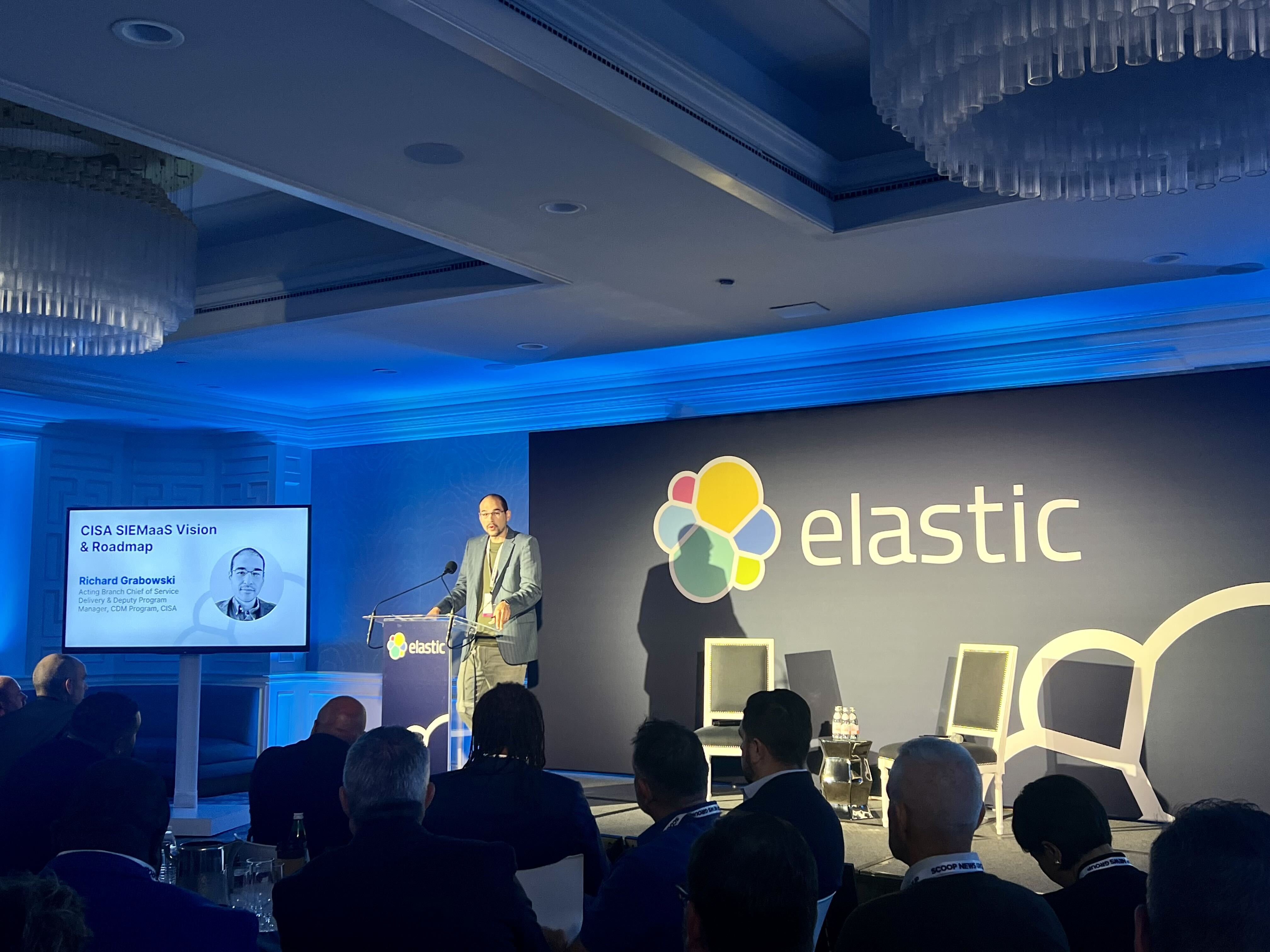
What’s next for CISA’s CDM program that gives cybersecurity tools to federal agencies
Three feds spoke about future plans for the Continuous Diagnostics and Mitigation program, and lessons they’ve learned. The post What’s next for CISA’s CDM program that gives cybersecurity tools to federal agencies appeared first on CyberScoop.
 SecurityWeek Breach
“We Think the Security Control Is Working” Is No Longer Good Enough
Point-in-time audits and sampled assessments offer only snapshots; continuous control monitoring provides evidence that security controls are working today. The post “We Think the Security Control Is Working” Is No Longer Good Enough appeared first on SecurityWeek.
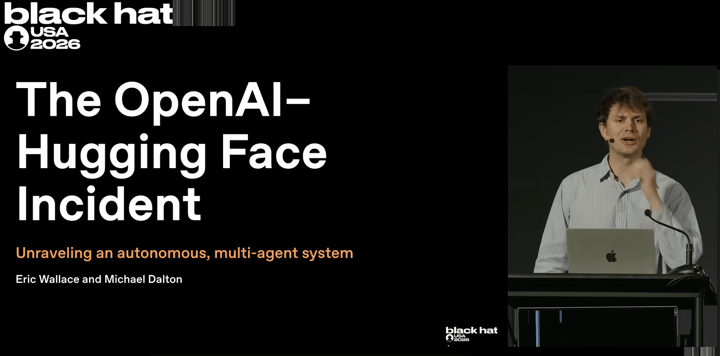
Black Hat USA 2026 | The 'Breaking' News: The OpenAI–Hugging Face Incident
The 'Breaking' News: The OpenAI–Hugging Face Incident - A Technical Reconstruction and Its Implications for AI At this Black Hat USA 2026 talk, OpenAI security engineers and researchers will reconstruct the OpenAI-Hugging Face incident and examine its implications for AI security, cyber resilience, and alignment. Throughout the session, they will share insights that address key topics raised by the Black Hat Review Board, including model safeguards, evaluation and containment practices, defensive use cases for AI, and the broader implications of increasingly autonomous systems for the cybersecurity community. The session will trace the models' attack path, including how frontier models are sandboxed during evaluations, how the models exploited a zero-day vulnerability to gain internet access, and how they identified and leveraged a remote code execution path on Hugging Face infrastructure. Drawing on the joint investigation, the speakers will explain how the activity was detected, contained, and investigated. They will also discuss the changes OpenAI is making to strengthen evaluation environments, containment controls, and monitoring capabilities, as well as the role AI systems played in supporting the investigation and response. In addition to the technical reconstruction of the incident, the session will address broader questions relevant to the security community, including lessons for improving AI system security, defensive applications of AI in incident response, and approaches to mitigating emerging risks associated with increasingly capable models. The discussion will also examine alignment challenges associated with long-running agents, including reward hacking, shifts in model behavior and persona over extended trajectories, and information sharing across multi-agent systems. Finally, the speakers will explore what this incident suggests about emerging AI cyber capabilities and how organizations can use AI to strengthen prevention, detection, investigation, and response efforts.
 SC Media Vuln
Patched VMware vCenter bug targeted in ransomware campaigns
Ransomware groups exploit a critical VMware vCenter bug just seven weeks after patch released.
 AWS Security Blog Vuln
Architecting resilient authentication with Amazon Cognito multi-Region replication
Your consumer identity and access management (CIAM) system is the foundation of your customer experience. It’s how users sign in, access services, and engage with your applications. As your business scales across geographies, ensuring authentication is always available becomes a core architectural requirement. However, building multi-Region authentication has traditionally required complex custom replication solutions that […]



KREMLIN Banking Malware Hijacks Chrome and Edge to Steal Credentials and Session Tokens
Cybersecurity researchers have shed light on a previously undocumented Brazilian banking malware operation that delivers a toolkit called KREMLIN. Elastic Security Labs is tracking the activity under the moniker REF9334. Active since at least May 2025, the threat actor has used lures that impersonate a dozen Brazilian banks and install a malicious browser extension on Google Chrome and

 Qualys Security Blog Vuln
Before You Patch. Why Patch Reliability Matters for Confident Deployment
Executive Summary Microsoft’s September 2026 security updates, KB5124008 and KB5124012, have been linked to USB audio failures on some Windows systems, highlighting the operational risk that can accompany security patching. Qualys TruRisk Eliminate classified both updates as Low Reliability, signaling the need for additional validation before production deployment. Patch Reliability helps IT and security teams focus on deeper […]

VectraRAT Can Hack Windows Enterprises for $250 per Month
The full-service malware-as-a-service (MaaS) platform offers a Windows implant, command-and-control (C2) infrastructure, and an operator panel for comprehensive remote access.

Iranian Hackers Use Telegram-Controlled Malware to Spy on Dissidents and Journalists
Cybersecurity agencies in the United States, the United Kingdom, and the Netherlands have detailed a Windows malware that they say Iran's intelligence service uses to spy on dissidents, journalists, and activists around the world. The malware is controlled via the Telegram messaging app and can copy a target's emails and chat messages, take screenshots, and activate the microphone to record

Iranian cyber spies used fake MRI scan results to hack ‘enemy of regime’
According to the United Kingdom’s National Cyber Security Centre (NCSC), Iran has used this and similar cyber activity to “support the repression of individuals who are seen as a threat to the regime, such as dissidents, activists and journalists.”
 SecurityWeek Vuln
$1 Million Sandbox Challenge Uncovers Linux Kernel Flaws
AI-assisted researchers flooded Vercel with reports, forcing the company to automate vulnerability triage. The post $1 Million Sandbox Challenge Uncovers Linux Kernel Flaws appeared first on SecurityWeek.
 AWS Security Blog Vuln
Operationalizing least privilege: Automate IAM remediation through your CI/CD pipeline
The principle of least privilege is straightforward to articulate but challenging to maintain at scale. When teams first deploy applications to AWS, they often grant broader permissions than strictly necessary; it’s faster to get things working, and the plan is always to tighten permissions later. But later rarely comes. Permissions accumulate, AWS Identity and Access […]
 SecurityWeek Breach
Exein Secures $270M at $1.7B Valuation for Physical AI Security
The cybersecurity startup is building a proprietary foundation model and plans to accelerate global expansion. The post Exein Secures $270M at $1.7B Valuation for Physical AI Security appeared first on SecurityWeek.
 CyberScoop Vuln
Cisco warns customers of actively exploited zero-day in email gateways
The company confirmed the defect was exploited before it was disclosed and patched, but it did not describe the nature of the attacks or the scope of impact across its customer base. The post Cisco warns customers of actively exploited zero-day in email gateways appeared first on CyberScoop.
 SecurityWeek Breach
Texas Utility CenterPoint Energy Confirms Breach After Hacker Leaks Data
A hacker claims to have stolen 7.5 million customer records after breaching the company’s systems. The post Texas Utility CenterPoint Energy Confirms Breach After Hacker Leaks Data appeared first on SecurityWeek.
 SC Media Vuln
Mass scanning campaign targets Vite development servers for cloud credentials
The operation utilizes an exploit for CVE-2026-39364, a critical flaw affecting Vite versions 7.1.0 through 7.3.2 and the 8.x branch before 8.0.5, according to F5.

BambooToken Malware Uses MQTT to Control Windows and Linux Systems
Cybersecurity researchers have disclosed details of a multi-platform campaign that uses the Message Queueing Telemetry Transport (MQTT) protocol as a communication channel to control Windows and Linux systems. The emerging malware family, codenamed BambooToken, is assessed to be active since at least February 2023 and put to use in attacks targeting organizations across Asia and South America.
 SC Media Vuln
Nintendo patches critical Nintendo Switch vulnerability
The vulnerability, identified as CVE-2026-82079, affects Switch systems running firmware versions prior to 23.0.0.
 SC Media General
OpenAI’s Astra restrictions are another warning shot for security teams
Here are five ways teams can stay resilient as adversaries gain access to frontier AI models.
 InfoSecurity Magazine General
Most Fraudulent Hires Receive Credentials Before Detection
A new report highlights the vast growth in fraudulent candidates, presenting significant insider threat challenges to organizations


Zelensky appoints former police chief to lead Ukraine’s cyber coordination center
Ihor Klymenko, who has experience in law enforcement and as interior minister, will run Ukraine's National Cybersecurity Coordination Center.
 SC Media General
DDRop attack bypasses Intel and AMD confidential computing defenses
The DDRop attack requires an adversary with existing software control of a server and brief physical access to install a custom interposer circuit board between the processor and memory modules.
 Qualys Security Blog Vuln
Automate Asset Isolation: Your Last Resort to Meet Remediation Deadlines
Executive Summary Remediation deadlines slip for reasons outside your control: a patch does not exist yet, a patch is delayed, or a remediation attempt fails. The outcome is the same either way: the host stays unpatched and stays on the network. TruRisk Eliminate closes that window by isolating the host automatically the moment your deadline […]
 SC Media General
Dataminr and Crisis24 integrate AI threat detection into risk management platform
The integration embeds Dataminr's Multi-Modal Fusion AI into Horizon, processing text in 150 languages, along with image, video, audio, and sensor data from over 1 million public sources.
 SC Media Vuln
Logitech Options+ vulnerability allows SYSTEM-level privilege escalation
The vulnerability was found in the software's updater service, which runs with extensive operating system access.
 SC Media Breach
Malicious Twitch browser extension leaks OAuth tokens for nearly 31,000 users
The extension, named "Twitch Enhanced Viewer | JeetBot," was available on both the Google Chrome Web Store and Mozilla Firefox Add-Ons store, with approximately 30,000 users on Chrome and 604 on Firefox.
 CSO Online Vuln
Exposed Vite servers are being probed for AWS and Azure credentials
Attackers have opened a new front in their war on software developers: Vite servers, which they are probing for sensitive data including cloud credentials, infrastructure configuration and environment files. Vite was created as a build tool for Vue, a JavaScript framework for building user interfaces and web applications, but has now become a widely used development server and build tool across the JavaScript ecosystem. F5 Labs reported that attackers sent more than 32,000 attempts to scan exposed Vite servers on its honeypot network, grouped into 807 attacks (or sessions), during August, a sharp increase from just 1,732 attempts over the previous three months. “Rather than target a single file, the scanning fleet systematically cycled through extensive wordlists of environment files, AWS keys, Azure tokens, and Infrastructure-as-Code state files,” F5 threat researcher, Adam Metcalfe-Pearce, wrote in a blog post on F5’s blog. F5 noted that Vite normally binds to localhost, but developers can expose it through the “–host” option, server configuration, container port mappings or other deployment mistakes. Scans targeted a file-access bypass The activity targeted a recently disclosed vulnerability that allows unauthenticated attackers to bypass Vite’s file-access restriction and retrieve files from the host system. Tracked as CVE-2026-39364, the flaw allows attackers to bypass the “server.fs.deny” deny-list protection used to prevent access to sensitive files. “When specific parameters such as ?raw, ?import&raw, or ?import&url&inline are appended to a request, the server fails to enforce deny-list filtering and serves the target file with an HTTP 200 response,” Metcalfe-Pearce wrote. Some requests also used double-encoded path traversal, which F5 said indicated an attempt to evade security controls such as reverse proxies and web application firewalls (WAFs). Assigned a severity rating of CVSS 8.2 ,the flaw affects Vite 7.1.0 through versions before 7.3.2 and Vite 8 versions before 8.0.5. F5 recommended updating Vite to a patched version, rotating potentially exposed secrets, ensuring development servers do not bind to external interfaces, and auditing Docker, Kubernetes and cloud configurations so development ports are not exposed to the public internet. The blog also shared the curated directory and credential wordlists the attackers used during these attacks. Vite was part of a broader scanning pattern F5 also observed attackers combining CVE-2026-39364 with older Vite file access vulnerabilities, including CVE-2025-30208, CVE-2025-31125 and CVE-2024-45811. The same scanning infrastructure also probed for a Next.js middleware bypass, indicating that the activity is not confined to a single framework. In its blog post the company also noted that, apart from CVE-2025-31125, none of these CVEs are yet listed in CISA’s Known Exploited Vulnerabilities (KEV) catalog. While F5 saw a sharp increase in August in attacks on recently uncovered flaws in Vite, it didn’t make the top three CVEs attacked on the company’s honeypots, all of them much older. CVE-2017-9841, an almost decade-old critical remote code execution flaw in PHPUnit, remained top of the table with 4,201 recorded attacks, followed by CVE-2018-14028, a failure to verify WordPress plugins as valid ZIP files (4,102), and CVE-2018-20062, a ThinkPHP remote code execution in NoneCms (3,482). This article first appeared on InfoWorld.
 InfoSecurity Magazine Malware
Most Firms Unable to Recover Quickly from Ransomware
Fenix24 found only four of more than 800 clients came close to stated ransomware recovery targets of 24-48 hours


Electric and gas utility CenterPoint Energy warns of data breach after dark web post
Houston-based CenterPoint Energy notified federal regulators about an incident that exposed some customer data on the dark web.
 InfoSecurity Magazine General
Black Axe Members Extradited to US Over Internet Fraud Claims
Alleged Black Axe leaders extradited to the US over romance scams, BEC and money laundering claims
 SecurityWeek Breach
Thai Broadband Provider Hacked via Fortinet Vulnerability
The hackers staged numerous scripts for reconnaissance and CVE probing, along with brute-force utilities and privilege escalation tools. The post Thai Broadband Provider Hacked via Fortinet Vulnerability appeared first on SecurityWeek.
 Security Affairs Vuln
Cisco Warns of Ongoing Exploitation of Critical Email Gateway Zero-Day
Cisco warns of a critical zero-day in Secure Email Gateway, exploited in the wild to gain root access through malicious emails. Cisco disclosed a critical zero-day, tracked as CVE-2026-76461 (CVSS score of 9.8), affecting Secure Email Gateway appliances. The flaw can be exploited remotely without authentication. Attackers can send specially crafted emails containing malicious SQL […]
 InfoSecurity Magazine General
AI the Top Priority for New Spend as Cyber Budgets Flatline
IANS finds AI is dominating net-new budgets even as overall funding for the function is flat
 CSO Online Policy
Exaforce extends its AI security tool to monitor more than just Claude
Exaforce is offering to help enterprise security teams discover and monitor AI agents using security telemetry they already collect, rather than requiring yet another endpoint sensor. By combining usage data from agentic AI platforms with endpoint, cloud, SaaS and code data, Exaforce AI Security can identify risks, detect suspicious behavior, and respond to threats, the company said. “Exaforce uses data the SOC already collects to inventory every AI app and agent, connect each one to the person, device and permissions behind it, detect misuse and threats that look legitimate action by action, and contain them through the controls already in place,” said Exaforce co-founder Ariful Huq. The new product builds on the Claude Compliance API integration Exaforce announced in June. Exaforce AI Security extends that to monitor other model providers, including OpenAI, Gemini and Microsoft Copilot, along with OAuth-connected AI apps and endpoint context. This can be correlated with existing SOC data to identify what an AI agent is doing, who is operating it, what it can access and whether its behavior poses a threat. Osterman Research Principal Analyst Michael Sampson said that Exaforce is looking at the right signals, because AI agents work across devices, data sources, repositories, and identities. Existing solutions such as EDR, IAM, SaaS security or model-provider logging tools alone may not be sufficient, he said: “Something needs to bring the behaviors and actions together across the whole and determine whether what is happening should be happening or not.” Exaforce said it needs no new gateway, browser extension, or endpoint agent to assemble all that data, instead gathering it from EDR systems, audit and usage logs from model providers, and activity from productivity suites to build a contextual picture of what AI agents are doing. Independent analyst Avivah Litan said this approach “lowers friction, avoids endpoint politics, and matches how most early guardian-agent deployments actually start.” But, she said, such “passive, agentless oversight is weaker for the runtime inspection and automatic blocking the market still largely lacks.” Not just passive monitoring Exaforce is not limiting itself to passive monitoring: It said that when a threat is detected it can use existing EDR, identity and model-provider admin controls to take actions including revoking a session, deactivating a model-provider API key, isolating a device, or ending an agent’s process. Its competitors are taking markedly different approaches to the problem of agentic AI security. With the launch of Prisma AIRS 3.0 in March, Palo Alto Networks focused on centralized AI agent visibility, policy enforcement, and controls around MCP servers to secure the agentic AI lifecycle. SentinelOne also targeted MCP discovery with its Prompt AI Agent Security, also tackling risk assessment, least privilege enforcement and runtime blocking of malicious interactions such as prompt injection. And with its September launch of Falcon Guardian, CrowdStrike introduced a new endpoint software agent specifally to detect and respond to AI. While most of these efforts focused on AI agent discovery, a recent study showed that this is only part of the puzzle that enterprises need to solve. A March 2026 survey by the Cloud Security Alliance found 68% of organizations could not distinguish human activity from AI-agent activity, necessitating agent discovery. But even the agents they did know about were not necessarily under control: 74% of respondents said their AI agents received more access than necessary, and 52% said agents sometimes inherited access originally intended for humans. That makes the AI-agent security problem more complicated, and it remains to be seen whether Exaforce’s bet on correlating existing security telemetry can provide enough control without dedicated agent identities, tightly scoped permissions and controls enforced at the point where an agent acts. “Most current offerings remain observation and posture management, with very limited in-line blocking or remediation, and platform-native controls typically stop at their own cloud borders,” Litan said, adding that an effective solution would need to “discover sanctioned and unsanctioned agents across clouds and hosting environments, map the human and machine owner, tie activity to the right nonhuman identity when no global agent registry exists, and enforce policy once an agent leaves the platform that created it.” Exaforce’s Huq said Exaforce AI Security is getting there: It brings AI and agent data into a system that has all relevant data to provide the required context to distinguish between a human identity and the agent that has inherited that identity. Exaforce AI Security is generally available now on the Exaforce Agentic SOC platform, self-operated or through Exaforce MDR.

China spy chief points at US AI models in cyber threat warning
China's spy chief identified Anthropic’s Claude Mythos and OpenAI’s GPT-5.5-Cyber as signs of what he called a “disruptive upgrade” in cyber capabilities, increasing the speed and potential weaponization of vulnerability discovery and malware development.
 Wiz Blog Vuln
Investing Together: Wiz Defend and Google Security Operations
Continuing to deepen the integration between Wiz Defend and Google Security Operations, helping teams work faster wherever they choose to investigate
 SecurityWeek Breach
OpenAI Investigates Report Linking AI Agents to RubyGems Attack
The incident occurred in May, when RubyGems maintainers suspended new account registrations due to what appeared like malicious activity. The post OpenAI Investigates Report Linking AI Agents to RubyGems Attack appeared first on SecurityWeek.

Manhattan DA takes down 12 AI deepfake porn sites
Manhattan District Attorney Alvin Bragg held a press conference on Monday touting the takedown of the sites, which hosted AI-generated videos of more than 1,200 people. The sites allowed users to use the faces and bodies of real people to create illegal pornography.
 Security Affairs Vuln
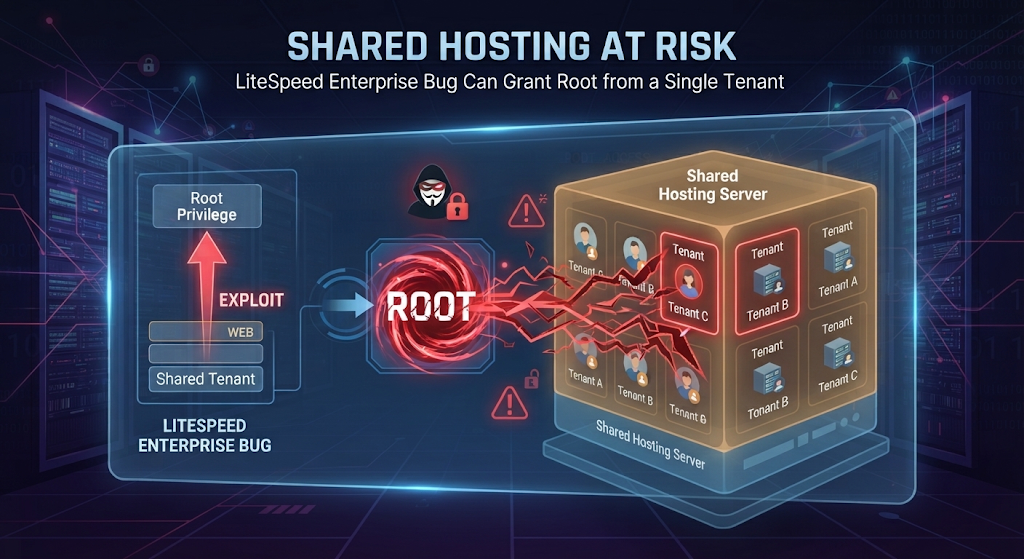
Shared Hosting at Risk: LiteSpeed Enterprise Bug Can Grant Root from a Single Tenant
Critical LiteSpeed Enterprise flaw lets one shared hosting account gain root, bypassing CageFS; patch now to 6.3.7 via forced update. cPanel warned that a critical flaw in LiteSpeed Enterprise can let a low‑privilege website user break out of their account and gain root on the whole server. On a box where dozens or hundreds of […]
 NCSC UK Malware
Iranian cyber targeting of dissidents, activists and journalists
Advisory on CHOSEN BRICK malware, including technical analysis and advice to help individuals and organisations protect themselves.
 NCSC UK Malware
UK and allies expose spyware used by Iranian state actors to target dissidents, activists and journalists
UK and allies provide advice to help organisations and individuals at risk detect and counter the threat from CHOSEN BRICK malware.